
What "fresca" actually means
There is a section of the menu called La Pasta Fresca, and it is not a marketing word. Here is the difference you can taste.
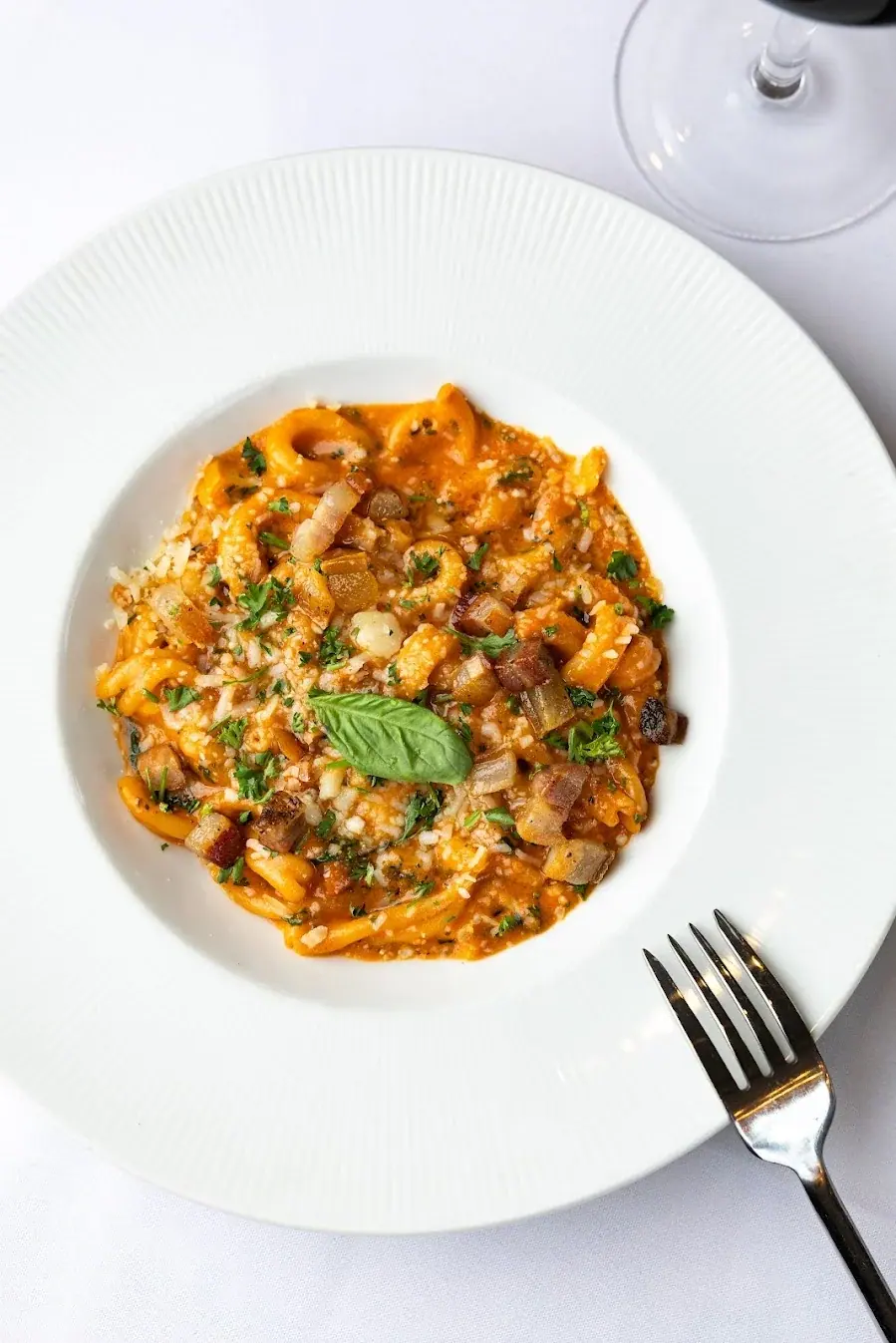
Our dinner menu has two pasta sections, and people ask about it often enough that it is worth writing down. La Pasta is one. La Pasta Fresca is the other. They are not a starter list and a main list. They are two genuinely different things.
Dried pasta is not the cheap one
This is the misunderstanding worth clearing up first. Dried pasta is not fresh pasta's lesser cousin, and a kitchen that treats it that way produces bad versions of both. Dried semolina pasta has bite, holds its shape, and grips a sauce in a way soft fresh pasta simply cannot. There is a reason an amatriciana is bucatini and not pappardelle. The sauce is sharp and fatty and needs something that pushes back.
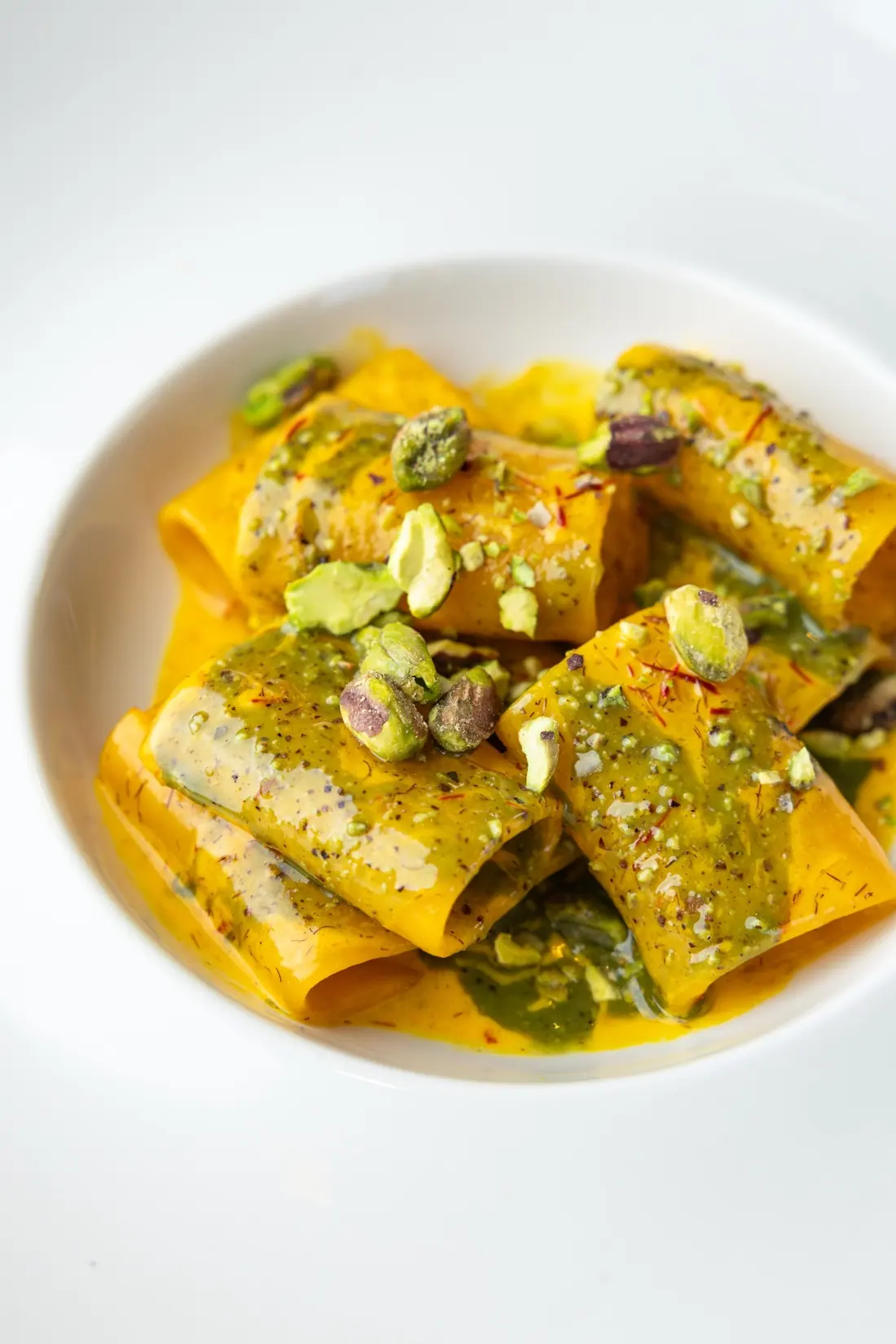
So the dried side of the menu is where the assertive sauces live. Guanciale and pecorino and Calabrian chili. Saffron and pistachio. Mussels, clams, shrimp and calamari in white wine.
Fresh pasta is a different material
Fresh pasta made with egg is softer, richer, and more porous. It drinks a sauce instead of resisting it, which is why it belongs with the slow ones: a ragù that has been going for hours, a truffle cream, a béchamel.
That is the whole of La Pasta Fresca. Pappardelle with ragù. Agnolotti stuffed with braised veal and truffle. Gnocchi, baked, under burrata. Lasagna with ragù and béchamel. Strozzapreti, which translates roughly as "priest stranglers" and which we will not be explaining further.
All of it is made here.
How to order
If you want the sauce to be the loudest thing on the plate, order from La Pasta. If you want the pasta itself to be the point, order from La Pasta Fresca.
Or order one of each and share them, which is what we would do.