
Why the pizza is long, not round
It arrives on a paddle, longer than it is wide, and that shape changes how the whole table eats.
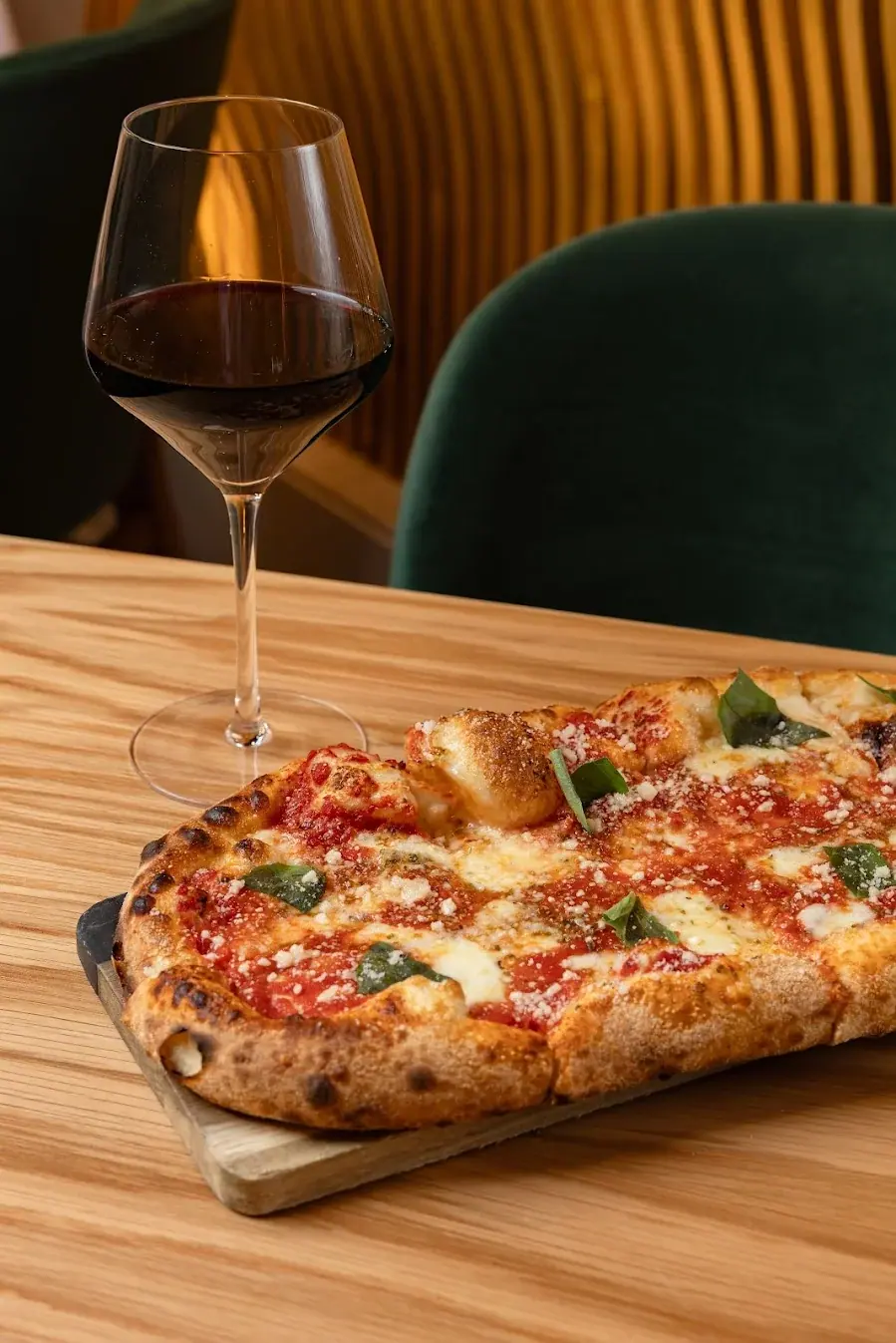
The first thing people say when the pizza lands is that it is the wrong shape. It is not round. It is long, closer to an oval than a circle, and it comes to the table on a wooden paddle rather than a plate.
That is Roman, and the shape is not a flourish. It is the point.
A paddle, not a stone
A Neapolitan round is stretched thin and thrown onto the floor of a very hot oven, where it cooks in ninety seconds and comes out soft enough to fold. It is a beautiful thing and it is a different thing.
Ours is pressed out long, baked on a paddle, and brought over whole. The edge puffs up and blisters, and the base stays firm enough to pick up a slice without it folding in half on the way to your mouth. Look at the rim when it arrives: those dark blisters are the part to notice.
What it is not
It is worth clearing up, because the words get used loosely. Al taglio means by the cut: a huge rectangular tray in a Roman bakery, a piece cut to whatever size you point at, weighed, and handed over in paper. That is street food and it is wonderful, and it is not what happens here.
Here you order a whole one, by name, at a price on the menu. Nothing is weighed.
How to order it
Order more than one, and put them in the middle. A long pizza cut across gives you pieces that are easy to pass, which a wedge never quite is. Two between four people, somewhere in the middle of the meal rather than at the start of it, is the way it works best.
The Margherita is San Marzano, fior di latte, olive oil and basil, and it is the one to judge us on. If you want the other end of the range, the Ricotta di Bufala e Tartufo has truffle honey on it and is not shy about it.